
Does varying yolk color affect the flavor of honest eggs?
posted on
May 16, 2025
As you know, we don't add any color to our feed. This is why our pastured corn & soy free eggs are called "honest yolk eggs".
"Color" includes unnatural stuff like dyes as well as natural stuff like marigold and paprika. Nearly all egg farmers nowadays do this... even the natural ones. Why? People demand consistent color yolks, thinking it means a certain quality. Little do most know, yolk color is superficial now.
At Miller's, we know this for a fact. Curiosity made us to send our eggs for testing, and there was zero nutritional difference in our orange vs yellow yolk eggs. What mattered most was the farming practices and quality of the feed, and our eggs came out on top for most tests.
We really love having varying yolk color. It's an indicator of what the birds are eating.
It tells our farmers how their pasture is doing. If the plants are too mature, not diverse enough, it's too wet or dry, or if chickens aren't eating the pasture, we'll see that with the yolk color!
Now, we've had an array of responses since we removed the color from our feed. One baffling one is --- the light colored yolks don't taste as good as the dark colored yolks.
Is this true? I mean, removing the color is only a superficial change. It shouldn't affect the flavor.
Well, we needed to find out. So... we did a blind tasting on the farm a few weeks ago. Here's what that looked like:
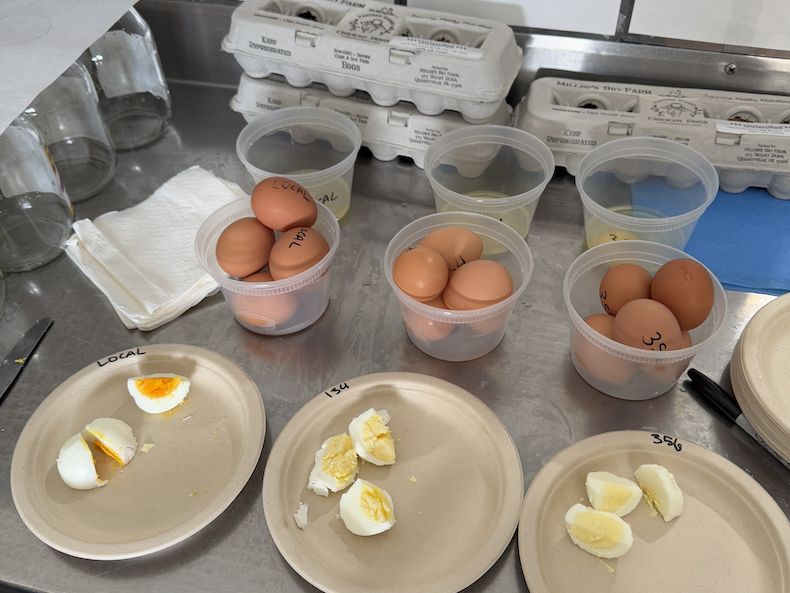
The results? The whole team agreed -- all eggs tasted the same!
The biggest factor affecting egg flavor was the yolk to white ratio. The more yolk, the more flavor.
It's spring, and our hens are out on pasture 100% of the time. An egg develops for about 6 weeks inside a chicken, so it takes some time. But... you should start to see darker yolks now.
Have you noticed a change in yolk color? Have you noticed a flavor change? Would you prefer consistent colored yolks or honest yolks?
I'd love to hear from you. Comment below or contact us 😊
PS: The egg shortage is 100% over, and we have plenty of eggs now!! That means egg bundles are back!


